SSC CHSL General Awareness: turn a broad subject into a reviewable plan
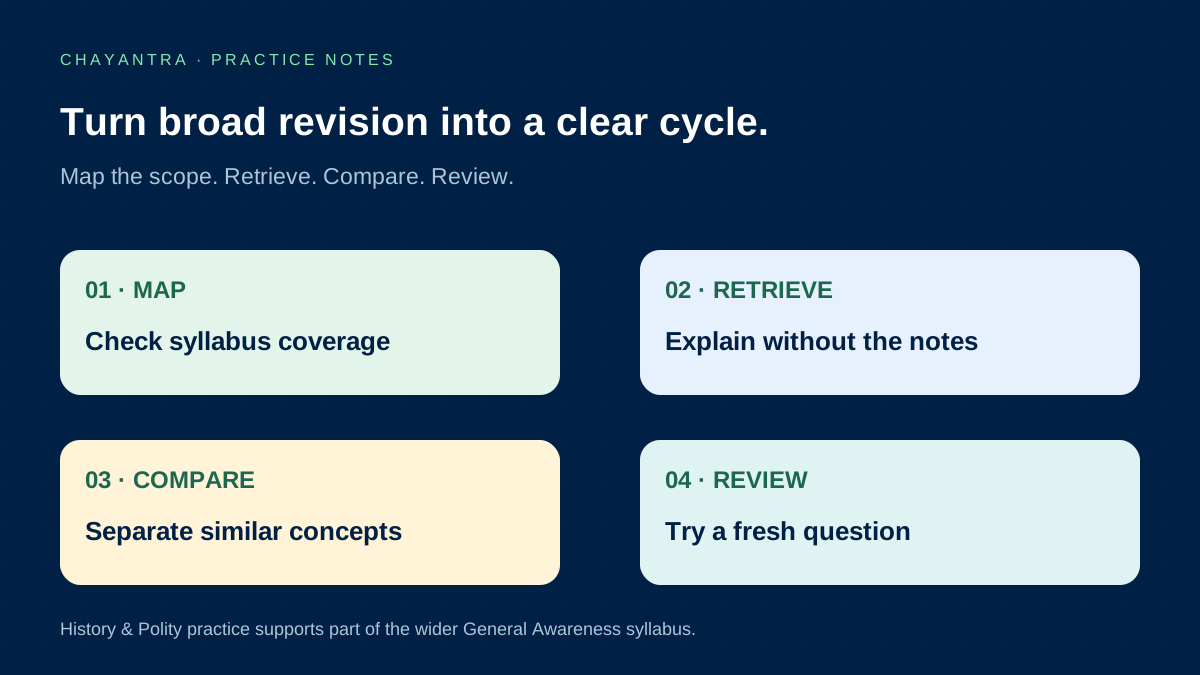
Build General Awareness preparation around a topic map, active recall and a short review cycle. Separate a lack of knowledge from confusion between similar facts, outdated information and rushed reading. A list of chapters or a large quiz count is not a substitute for knowing what your own mistakes show.
This is a study-method guide for SSC CHSL preparation, not an official notification or a complete syllabus claim. Confirm the current scope and rules through the SSC website, its notices and corrigenda. The CHSL exam-pattern article helps distinguish the stages; the practice hub links the papers currently available on Chayantra.
Make a coverage map before a timetable
Start with the current official syllabus and create one row for each subject area you need to study. Give each row a status such as not started, can explain with help, or can recall independently. A separate column should show whether you have a suitable practice source. This prevents a familiar subject from consuming the whole week just because its quizzes are easy to find.
| Study area | A useful learning task | A check before moving on |
|---|---|---|
| History | Place a topic on a timeline and explain its context | Distinguish a nearby period or similar term |
| Polity | Connect an institution, function and constitutional context | Explain how a similar institution differs |
| Geography and environment | Relate a location, process or feature to a map or concept | Apply the relationship in a new question |
| Science and everyday applications | Explain the underlying process in plain language | Separate a cause from a memorised label |
| Current affairs | Record the event, date and reliable source | Recheck time-sensitive facts before using them |
These are planning categories, not a reproduction of every line in an official syllabus. Add or change rows after reading the actual notice. Treat any gap in your practice library as a gap to fill, not evidence that the topic is unimportant.
Know what Chayantra currently offers
The SSC General Studies library provides published History and Polity quizzes. Those subjects are a useful starting point, but they do not make the library complete coverage of General Awareness. Use the live library to check the current quiz count, questions, duration and guest/sign-in rules.
The topic-test directory also includes General Awareness sets. Some are labelled September topics, such as dates/themes, awards or books. Use month-labelled material as historical revision; it is not a continuously updated news feed. Check the period a question concerns and verify changing facts from a current reliable source.
Geography, science, economics and other required areas need their own study and practice sources where they are not covered by published Chayantra sets. Do not let a catalogue filter stand in for a syllabus checklist.
Use active recall for History
After reading a short section, close the material and write the sequence or relationship you are trying to learn. Ask “What came before this?” and “Which feature distinguishes this topic from the nearby one?” Reopen the source to correct your explanation, not merely to count whether a keyword appeared.
A timeline can be more useful than an isolated fact list when the error concerns ordering. A two-column comparison can help when two terms are repeatedly confused. Choose the note format from the type of mistake, rather than using the same flashcard format for every topic.
Once the explanation is stable, choose a relevant History quiz from the course library. Review uncertain-correct answers as well as wrong ones: a lucky selection can hide the same confusion that will cause a later error.
Use relationships for Polity
Organise a short topic around a few questions: What institution or provision is being discussed? What does it do? What conditions or limits matter? Which similar concept is easy to confuse with it? Consult the source again where your answer is incomplete.
Keep the wording of legal or constitutional material precise. A coaching summary is a learning aid; it should not replace an authoritative text when an exact provision matters. Avoid adding a confident “always” or “only” that your source does not support.
Try explaining a contrast aloud, then test it on a fresh question. If you can repeat a definition but cannot distinguish the alternatives, the next task is comparison, not faster recall.
Review current affairs with a date and a source
For time-sensitive material, record the date or period alongside the fact and the source. Distinguish the date of an event from the date a summary was published. A later correction can supersede the first report; an old article appearing in search does not become current because it is easy to find.
Keep the note compact: event or theme, what changed, relevant date, source, and one recall prompt. Do not copy whole news pages into a revision file. The current-affairs revision routine develops a repeatable recall process.
For recruitment notifications, eligibility, application dates and exam schedules, follow the conducting body’s latest official documents. This article does not announce a new notification, extend a deadline or certify that a third-party calendar is up to date.
Diagnose what a wrong answer means
Use four practical labels: did not know, confused with a similar fact, used outdated information, and misread the question. They lead to different corrections. Re-reading a chapter may help a knowledge gap, but it will not automatically fix missing a negative word in the question.
Consider a fictional learner who mixes two historical periods and also misses a word such as “incorrect”. The first correction is a comparison or timeline; the second is restating what the question asks before selecting an option. Adding both to “revise History” hides the difference.
Use the mock-test error log to record the cause and one next action. Avoid copying private question text into a shared document; use a reference that lets you reopen your own attempt.
A flexible weekly cycle
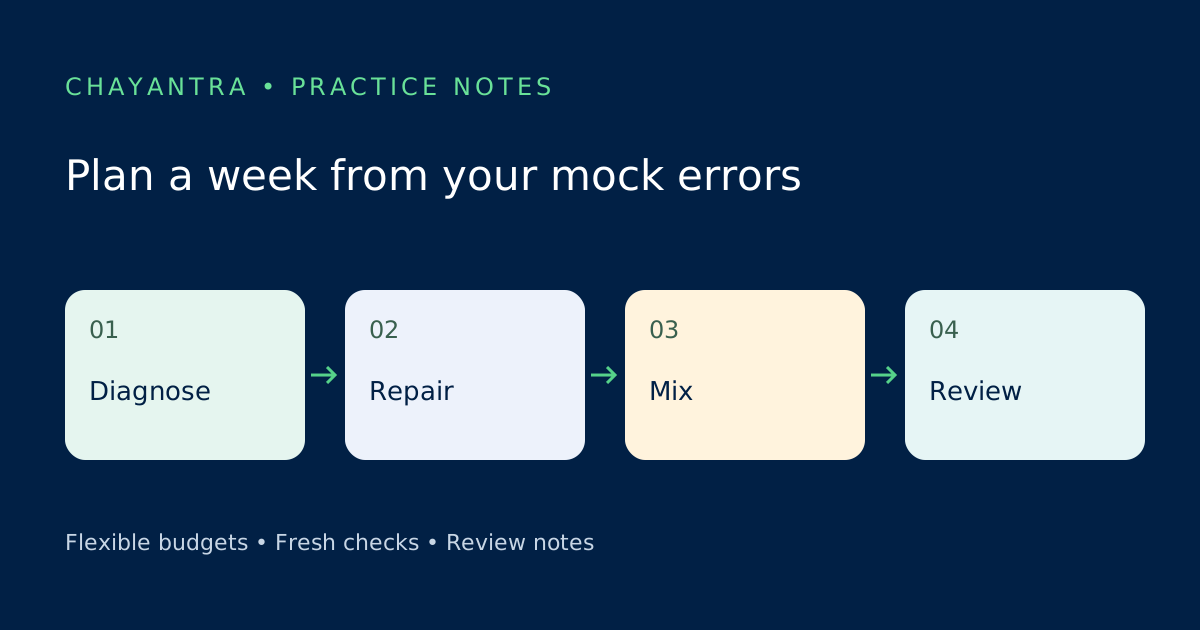
Begin the week with one short diagnostic or an existing mock review. Choose two priorities: perhaps a History confusion and a Polity distinction. Spend the next sessions correcting those relationships and checking fresh examples. Later in the week, mix the corrected topics with older material so recall is not driven only by the order of your notes.
Leave a review session for unanswered and uncertain-correct questions. Adjust the workload to the time available for explanation and checking. A larger number of attempts is not automatically better preparation if every attempt creates an unreviewed backlog.
The seven-day CHSL planner is editable: enter your actual time budget, review dates and next actions. Its days are a suggested study structure, not an official timetable or a guaranteed score-improvement programme.
Choose the next practice honestly
Use the History and Polity course quizzes for those subjects, the matching GA topic links for their stated scope, and the CHSL mock hub for combined practice when ready. Check every paper’s instructions and answer-review coverage. Some CHSL papers provide an answer key without worked explanations.
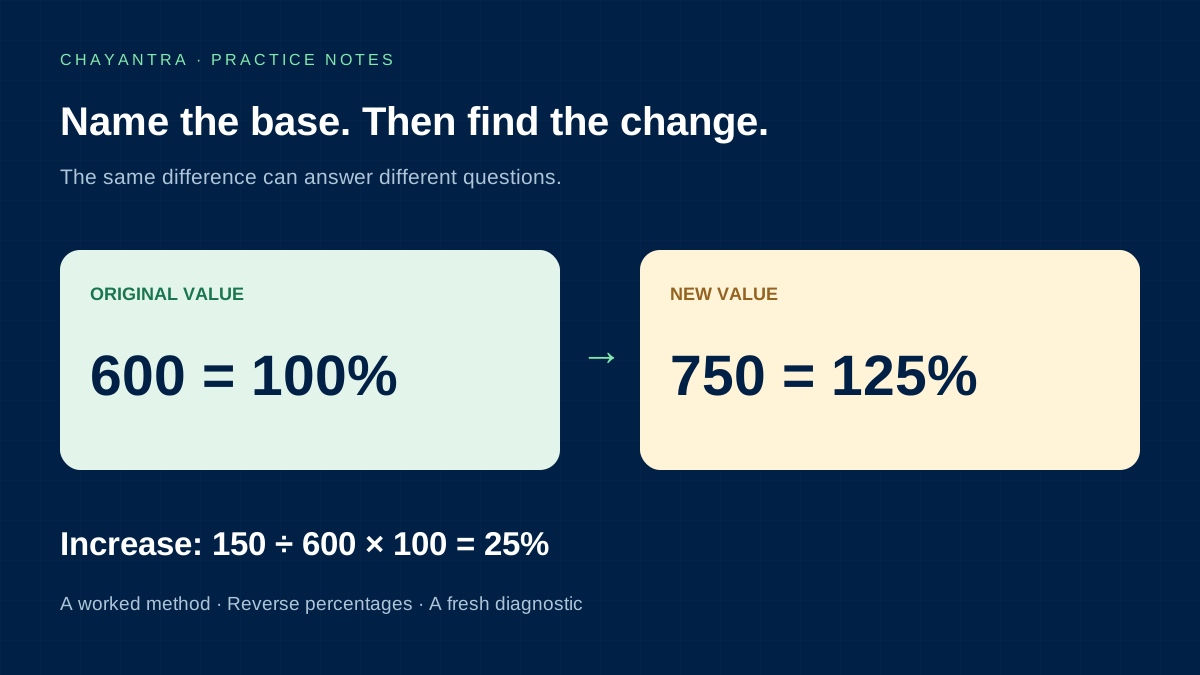
If arithmetic is another recurring weakness, work through percentage bases before adding speed. If reading a question inaccurately causes repeated errors, separate comprehension from factual recall rather than adding more memory work.
Common questions
Are History and Polity enough for General Awareness? No complete-coverage claim is made here. Compare your study map with the current official syllabus and provide sources for the other required areas.
How many quizzes should I take each day? Choose a number you can also review. There is no universal daily quantity that guarantees readiness or a particular score.
When should I retest a weak topic? After you can explain the correction without the answer visible. Use a fresh example, then return later to see whether recall still works outside the original reading order.